Rediscovering the Subtle Genius of Bahram Beizaie: A Cinematic Journey Through Censorship and Art
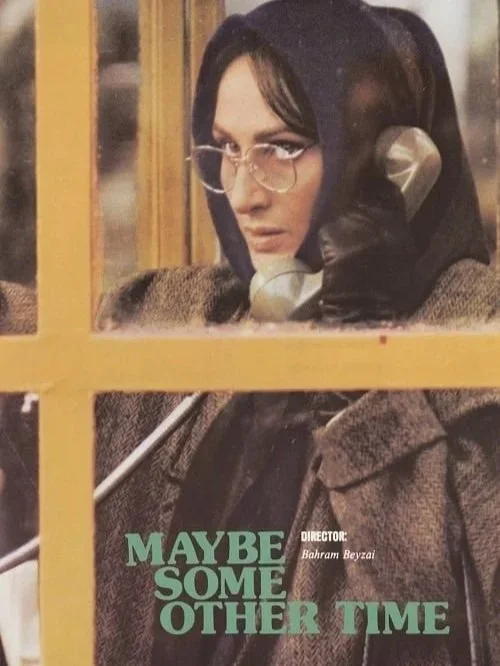
Four years after his return to Iran, Bahram Beizaie’s Maybe Some Other Time was finally released to the public. Beyond the universal praise for Susan Taslimi's stellar performance and Beizaie’s unparalleled contributions to both literature and cinema, what Maybe Some Other Time truly offered was an invitation into the delicate art of storytelling within the confines of censorship.
In a regime marked by heavy restrictions, Beizaie’s film opened a window into how artists, forced to navigate an authoritarian landscape, communicated their visions while working within the narrow margins dictated by a constantly watchful government. Watching Maybe Some Other Time repeatedly during a time of personal transition, I found myself drawn to its subtle yet impactful details—particularly the vintage mannequins that once filled boutique windows, marking an era when choosing a dress was an experience that felt truly special. This was not just about fashion, but about the art of choice; an art that, much like Beizaie’s own, could not be fully realized under oppressive circumstances.
The film's aesthetic choices also stood out: the iconic yellow phone booths became symbols of communication in a world where every word was carefully weighed. And then, there were the moments of weather-related relief: when it rained, a mandatory headscarf and trench coat could provide a semblance of freedom and identity, an ingenious way of adapting to the restrictions placed on women. These details were not just set pieces; they were deeply intertwined with the film’s narrative, hinting at deeper truths about society’s undercurrents.
Mr. Beizaie’s artistry was not just in what he showed, but in what he suggested. Through Maybe Some Other Time , I realized how much the form and style of a director can influence storytelling, particularly when operating under the constraints of censorship. His vision was a masterclass in how to craft art without directly confronting the powers that be, instead finding clever, subtle ways to express complex ideas.
The Personal Connection: A Journey Into Beizaie’s World
Cut to four years later: I auditioned for him and my father was cast in Beizaie’s Travellers, and my mother took on the responsibility of designing many of the film’s costumes. It was common for Homa Rousta, Jamileh Sheiki, and Atash to visit our home for fittings, and Mr. Beizaie himself would sometimes join us for lunch. I remember one instance when he admired our dining table lamp so much that he wanted it replicated for a film set!
A Legacy That Continues to Inspire
Years later, our paths crossed again in California where Mr. Beizai was conducting workshops at Stanford University as part of his newly appointed professorship and staged Ardaviraf’s Report where I had the opportunity to play one of the singing narrators in a style that was as foreign to me as Greek.
The social conversations he had with Jon in his good English remain some of my most cherished memories of his decade-long presence in California and his kind words made me exclaim to him: “Now, I can die in peace”.
Mr. Beizaie’s influence continues to resonate, and his vast body of work have carried his creative legacy into new realms on the international stage.
Though he is no longer with us as of his birthday this year , his contributions to Iranian cinema and global artistry remain timeless. We will continue to honor his memory, as his films continue to inspire and teach.
My favorite quote: “My name is Bahram Beizaie, and I hope I haven’t made too many mistakes”.
Farewell, Sir, and thank you for the good times. You are a true national treasure.